How we built this setup
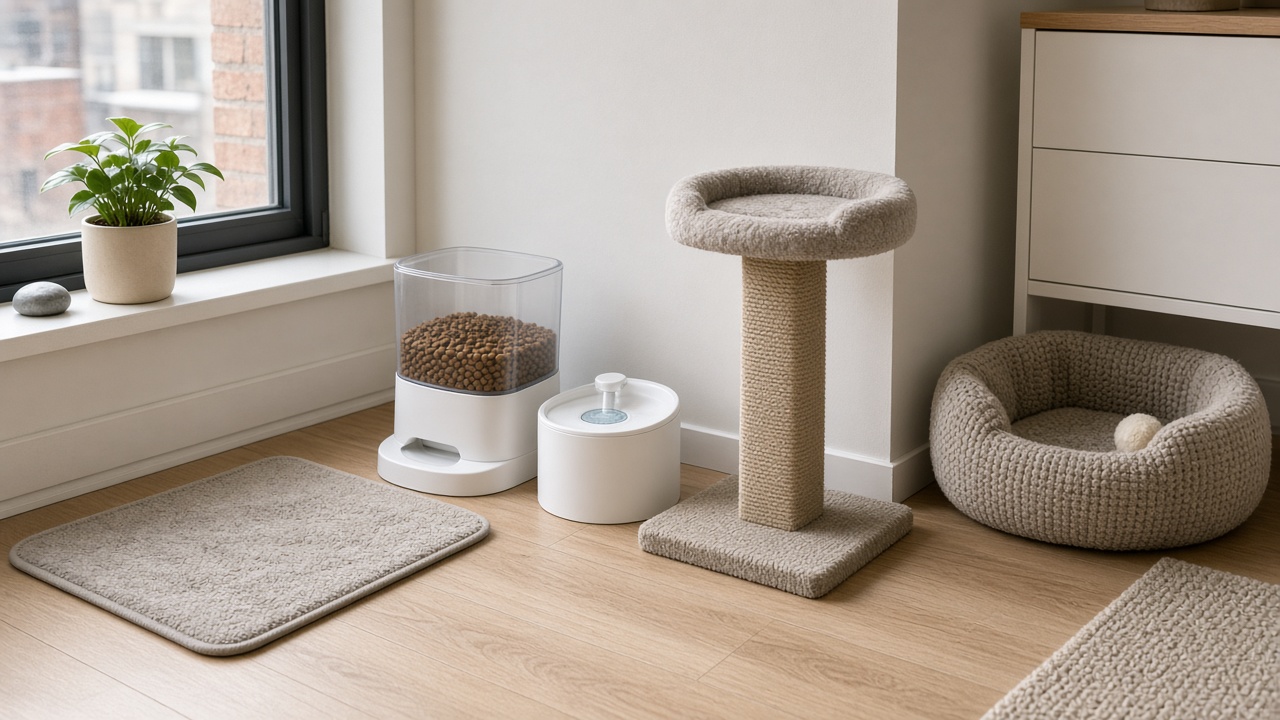
Set up the food, water, and litter zones before the cat arrives. An automatic feeder can support a timed routine, while a slow-feeder bowl may be better when the main issue is eating too quickly. A fountain or stainless or ceramic bowl should be placed away from the litter box and cleaned as directed.
Litter care is a daily system, not a one-time purchase. Choose a litter box and scoop that fit the cat and available room, then keep clumping litter stocked and remove waste regularly. Add a scratching post or cardboard scratcher near the places the cat already wants to scratch, and use short play sessions to build confidence rather than forcing interaction.
The carrier should be easy to secure and large enough for the cat to stand and turn according to veterinary guidance. Confirm dimensions, cleaning access, litter preferences, feeder programming, and current product details before checkout.
Cat setup checks:
• Place food, water, litter, scratching, and resting areas in separate usable zones.
• Choose a litter box that allows the cat to turn and enter comfortably.
• Test the feeder and fountain before relying on them during an absence.
• Leave the carrier open with familiar bedding so it is not only associated with vet trips.

 2
 3
 4
 5
 6
 7
 1Must-buyView on Amazon ↗